
Brain Tumor Symptoms, Types, Diagnosis & Treatment Options
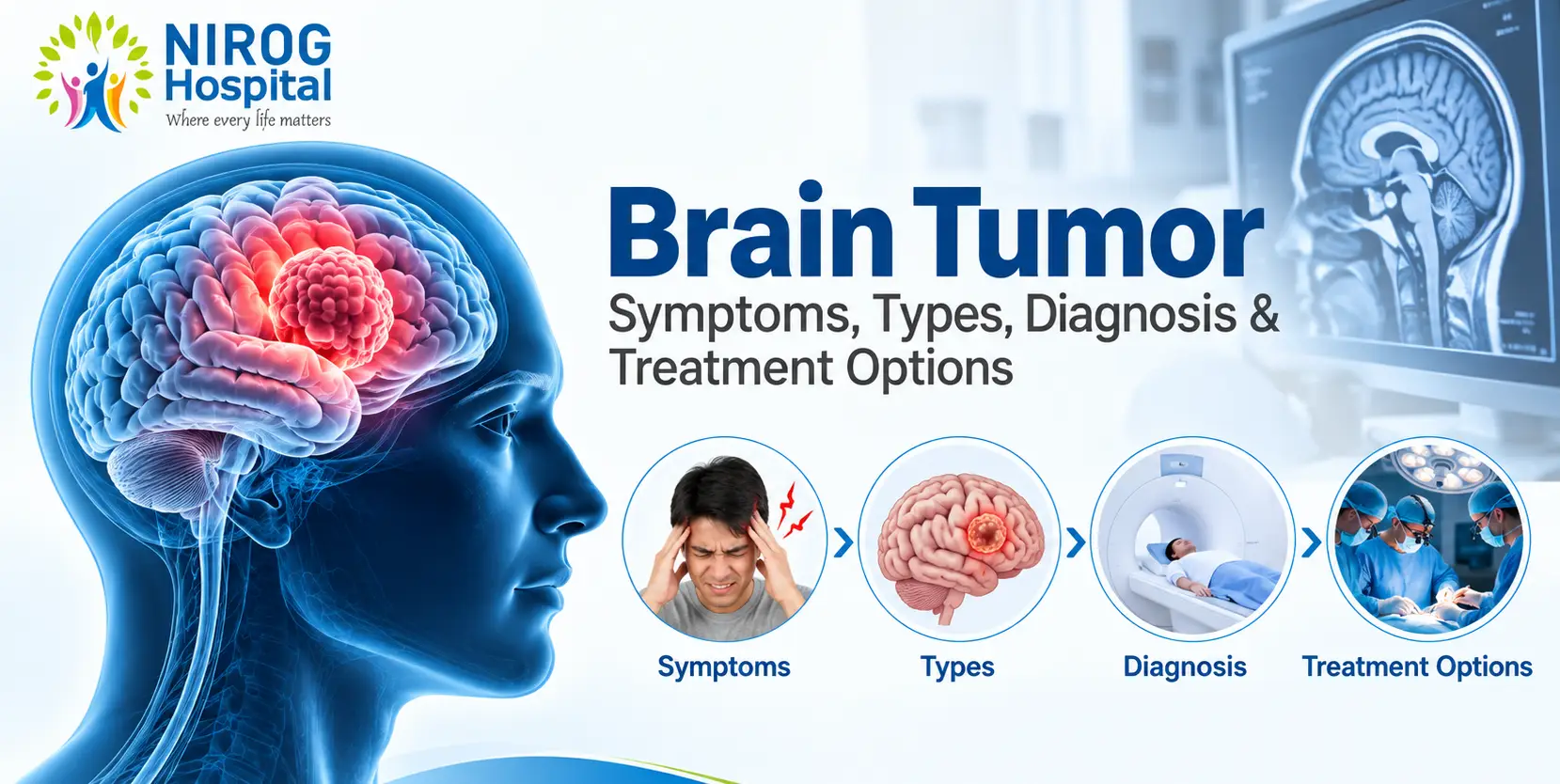
A brain tumor is an abnormal growth of cells in or around the brain. Brain tumors can be benign or malignant, and their symptoms and treatment can vary depending on their type, size, location and effect on surrounding brain tissue.
Understanding the warning signs, diagnostic tests and available brain tumor treatment options can help patients and families make informed decisions with their healthcare team.

What Is a Brain Tumor?
A brain tumor develops when abnormal cells grow in or around the brain. Some tumors begin in the brain or nearby tissues, while others can spread to the brain from cancer that started elsewhere in the body.
Brain tumors may be benign or malignant. Even a benign tumor can cause significant symptoms if it grows in an area that affects important brain functions.
The type and location of a tumor are important factors when doctors plan diagnosis and treatment. NCI guidance notes that treatment decisions for adult central nervous system tumors depend on factors including tumor type, location, grade and the amount of tumor remaining after surgery. Learn more about brain tumor diagnosis and treatment from the National Cancer Institute.
Common Brain Tumor Symptoms
Brain tumor symptoms can vary considerably between patients. Symptoms may depend on where the tumor develops, how large it becomes and whether it affects nearby areas of the brain.
Possible symptoms include:
- Persistent or worsening headaches
- New or unexplained seizures
- Nausea or vomiting
- Changes in vision
- Difficulty with balance or coordination
- Weakness or numbness
- Speech or language difficulties
- Changes in memory or concentration
- Changes in personality or behavior
- Difficulty walking or performing normal activities
These symptoms can also occur with many other medical conditions. Having one or more of these symptoms does not by itself mean that a person has a brain tumor.

Types of Brain Tumors
There are many different types of brain and central nervous system tumors. They can be classified according to the cells or tissues from which they originate and their biological characteristics.
Gliomas
Gliomas develop from glial cells and include several different tumor types and grades. Treatment depends on the specific diagnosis and molecular characteristics.
Meningiomas
Meningiomas develop from the membranes surrounding the brain and spinal cord. Many are slow-growing, although some can behave more aggressively.
Pituitary Tumors
Pituitary tumors develop in or around the pituitary gland and may affect hormone production or nearby structures involved in vision.
Schwannomas
Schwannomas develop from cells associated with nerves. Their symptoms depend on the nerve involved and the location of the tumor.
Metastatic Brain Tumors
Metastatic tumors occur when cancer from another part of the body spreads to the brain. Their treatment is generally planned according to the primary cancer, number and location of brain lesions and the patient's overall condition.
Benign vs Malignant Brain Tumors
| Feature | Benign Tumor | Malignant Tumor |
|---|---|---|
| Cancerous | Usually non-cancerous | Cancerous |
| Growth | May grow slowly, depending on type | May grow more aggressively |
| Effect on brain | Can cause symptoms by pressing on nearby structures | Can invade or affect surrounding brain tissue |
| Treatment | May include observation, surgery or other treatment | May involve surgery, radiation, medicines or combined treatment |
The terms benign and malignant do not by themselves determine how serious a brain tumor will be. Location, size, growth behavior and effects on neurological function are also important.
What Causes Brain Tumors?
The exact cause of many brain tumors is not known. Some tumors are associated with genetic or inherited conditions, while others develop without an identifiable cause.
Doctors may consider a patient's medical history, family history and other clinical information when evaluating a suspected brain tumor.
How Is a Brain Tumor Diagnosed?
Diagnosis usually begins with a medical history and neurological examination. Imaging tests are then used when a brain tumor is suspected.
Neurological Examination
A neurological examination can assess functions such as muscle strength, coordination, reflexes, sensation, vision and cognitive function.
MRI Brain
MRI provides detailed images of brain structures and is commonly used when evaluating suspected brain tumors. Contrast-enhanced MRI may provide additional information about the lesion.
CT Scan
CT imaging can provide useful information about the brain, skull and certain urgent abnormalities. It may be used when rapid imaging is required or when additional information is needed.
Biopsy
A biopsy involves obtaining tumor tissue for examination by a pathologist. When appropriate, tissue analysis can help determine the tumor type, grade and other characteristics that guide treatment planning.
NCI explains that MRI and CT have complementary roles in the evaluation of central nervous system tumors and that biopsy may be needed to establish a definitive diagnosis in appropriate cases. Read the NCI clinical information on brain tumor diagnosis.

Brain Tumor Treatment Options
Brain tumor treatment is individualized. The appropriate approach depends on factors such as tumor type, grade, location, symptoms, overall health and whether the tumor can be safely treated surgically.
Depending on the diagnosis, treatment may include:
- Active surveillance
- Brain tumor surgery
- Radiation therapy
- Chemotherapy
- Targeted medicines for selected tumors
- Supportive treatment
- Rehabilitation
Brain Tumor Surgery
Brain tumor surgery may be recommended when the tumor can be safely accessed and removal or tissue sampling is appropriate.
The goal may be to remove as much tumor as safely possible, obtain tissue for diagnosis, reduce pressure caused by the tumor or relieve certain symptoms. The extent of surgery depends on the tumor's location and its relationship with important areas of the brain.
NCI notes that surgery may be used for both diagnosis and treatment, with the goal of removing as much tumor as possible while preserving neurological function. :contentReference[oaicite:1]{index=1}
Craniotomy
A craniotomy involves temporarily opening part of the skull to provide access to the brain. The surgical approach depends on the tumor's location and the structures surrounding it.
Stereotactic Biopsy
A stereotactic biopsy uses imaging guidance to obtain a small tissue sample, particularly when a tumor is located in an area where extensive surgical removal may not be appropriate.
Awake Brain Surgery
In selected cases, an awake surgical approach may be considered to help the surgical team assess important functions such as speech or movement while operating near critical brain areas.
Endoscopic Procedures
Endoscopic techniques may be appropriate for selected tumors or locations. The exact procedure depends on the tumor and the patient's clinical condition.

Advanced Technology Used in Brain Tumor Surgery
Modern neurosurgical care may use technologies that assist with surgical planning, navigation and monitoring of neurological functions.
Neuronavigation
Neuronavigation uses preoperative imaging to help the surgical team plan and navigate toward a targeted area of the brain.
Surgical Microscopy
High-magnification surgical microscopes can provide an enlarged view of delicate brain structures during selected procedures.
Intraoperative Neuromonitoring
Intraoperative monitoring can be used in selected operations to assess important neurological pathways during surgery.
Nirog Hospital's brain tumor treatment service describes the use of neuronavigation, surgical microscopy and neuromonitoring as part of its neurosurgical care. Learn more about brain tumor treatment in Patna.
Radiation Therapy for Brain Tumors
Radiation therapy uses high-energy radiation to target tumor cells. It may be used after surgery, as an alternative to surgery in selected situations, or as part of treatment for certain tumors.
The type, dose and timing of radiation depend on the diagnosis and treatment plan.
Chemotherapy and Medicines
Some brain tumors may be treated with chemotherapy or other medicines. The choice of medication depends on the tumor's type and molecular characteristics and whether the medicine is appropriate for the specific diagnosis.
Medicines may also be used to manage symptoms or complications associated with a brain tumor or its treatment.
Can a Brain Tumor Be Treated Without Surgery?
Not every brain tumor requires immediate surgical removal. Depending on the tumor type, size, location, symptoms and overall clinical situation, doctors may recommend observation, radiation therapy, medicines or another treatment approach.
Some tumors may be difficult or unsafe to remove surgically because of their location. In such cases, treatment may be based on imaging, biopsy findings when possible and the recommendations of the specialist team.
NCI describes active surveillance as an option for selected slow-growing tumors that do not cause symptoms, while other tumors may require surgery, radiation, chemotherapy or combinations of treatments. :contentReference[oaicite:2]{index=2}
Brain Tumor Treatment at Nirog Hospital in Patna
Nirog Hospital provides evaluation and treatment planning for patients with brain tumors in Patna. Its brain tumor service describes neurosurgical care supported by diagnostic imaging and technologies such as neuronavigation, surgical microscopy and neuromonitoring. :contentReference[oaicite:3]{index=3}
For neurological evaluation and medical management, you can also explore Neurology treatment in Patna and Neuro Medicine in Patna.
When cancer-related treatment is required, coordinated care may also involve Oncology Medicine in Patna.

Recovery After Brain Tumor Surgery
Recovery after brain tumor surgery varies significantly between patients. The recovery process depends on the type of operation, tumor location, neurological function, overall health and whether additional treatment is required.
Some patients may need rehabilitation after surgery. Depending on their needs, rehabilitation can include:
- Physical therapy
- Speech and language therapy
- Occupational therapy
- Balance and coordination exercises
- Support for returning to daily activities
Your neurosurgical team will provide individualized instructions about wound care, medicines, activity and follow-up imaging.
When Should You Seek Medical Evaluation?
New or persistent neurological symptoms should be discussed with a qualified healthcare professional, particularly when symptoms are worsening or unexplained.
Seek urgent medical attention for symptoms such as:
- A first or prolonged seizure
- Sudden weakness or numbness
- Sudden difficulty speaking
- Sudden loss or major change in vision
- Severe or rapidly worsening headache
- Repeated vomiting with neurological symptoms
- New confusion or loss of consciousness
These symptoms can have many causes and do not necessarily indicate a brain tumor, but some may represent a medical emergency.
Questions to Ask Your Brain Tumor Specialist
- What type of brain tumor is suspected?
- Where is the tumor located?
- What imaging tests are required?
- Is a biopsy necessary?
- Is brain tumor surgery appropriate?
- What are the goals and risks of surgery?
- Could radiation or medicines be required?
- Will rehabilitation be needed?
- What follow-up tests will be required?
- Would a second opinion be helpful?
Final Thoughts
Brain tumor symptoms can vary depending on the tumor’s type, size, location and growth pattern. Proper diagnosis may involve neurological evaluation, MRI or CT imaging, and biopsy when required. Treatment can include surgery, radiation therapy, medicines or a combination of approaches based on the individual diagnosis.
If you or a family member has concerning neurological symptoms, consult a qualified specialist for appropriate evaluation and treatment planning.
Related Treatments & Services
Specialized medical departments and care related to this article at Nirog Hospital:
Frequently Asked Questions
Quick answers to common questions regarding this topic
Q. What is a brain tumor?
Q. Are all brain tumors cancerous?
Q. How is a brain tumor diagnosed?
Q. What are the treatment options for a brain tumor?
Q. What is neuronavigation in brain tumor surgery?
Q. Can brain tumors be treated without surgery?
Related Tags:
Jeevan Deep
Healthcare Content Writer
Jeevan Deep is a healthcare content writer focused on creating clear, informative, and patient-friendly content on medical conditions, treatments, procedures, and healthcare services. The content is developed to help patients and families better understand their healthcare options and make informed decisions.